From Jet Bridge to Carousel: Where Arrival Time Actually Goes
Your flight lands at 06:40 after nine hours in the air. The seatbelt sign goes off, the aisle fills, and the next forty minutes will shape how the rest of your day feels. Two questions compete for attention: how long until you're standing at the belt, and once the bag is in hand, which exit actually leads where you need to go?
Baggage claim and terminal navigation are one continuous sequence, not two problems. Decisions made before landing — where you sit, whether you check a bag at all, how you've arranged your pickup — ripple through both. The trade-offs between time, convenience, and support are worth thinking through in advance, because the arrival plan that holds up is the one built for the moment something slips.
What Happens Between Gate and Belt
Between the gate and the belt sit several fixed stages: deplaning row by row, passport control or immigration on most international arrivals, the walk to the carousel, the wait for bags, and, at many airports, customs screening after collection. Border queue duration depends on your nationality, document status, and how many other flights land in the same window — factors you can estimate but not control.
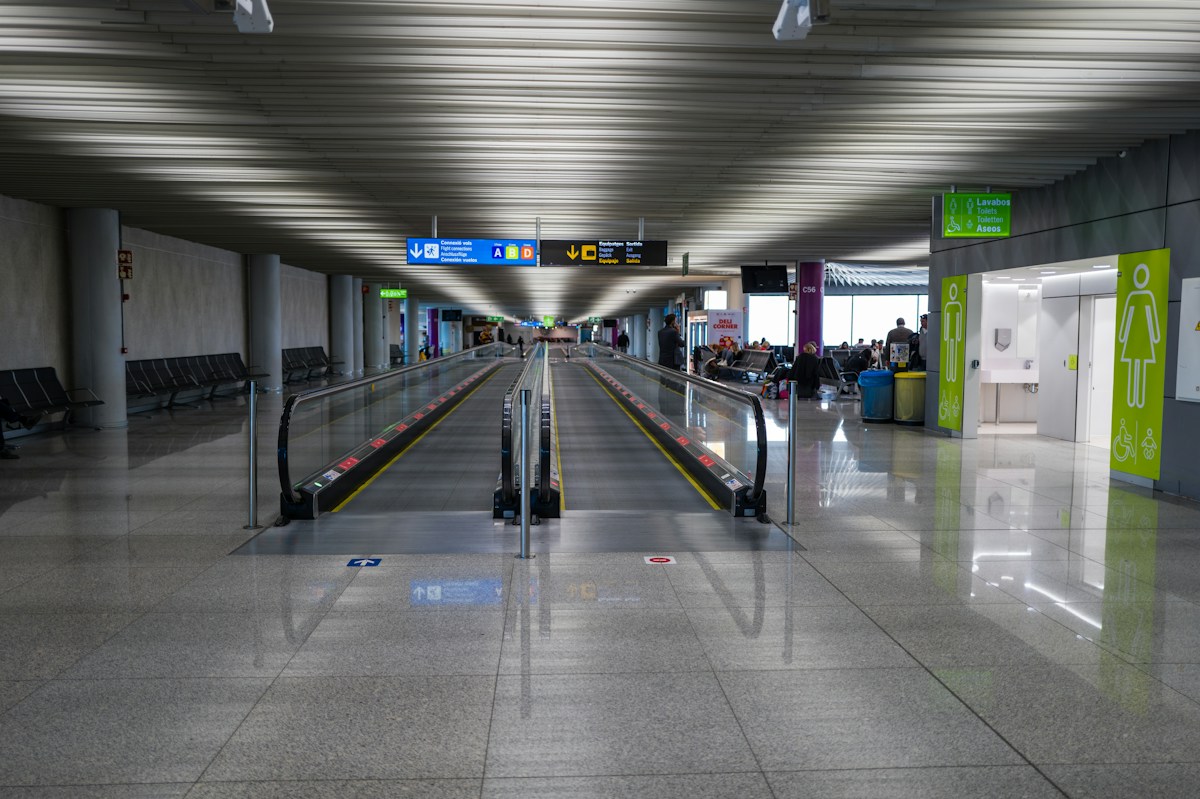
Walking distances are the part travelers underestimate most, and they vary enormously between airports. Consider a traveler landing at Madrid-Barajas on a long-haul flight into Terminal 4. The satellite building (T4S) connects to the main terminal by an automated people mover, and the airport's arrivals guidance publishes the route and estimated transfer times — check the official Aena page for Madrid-Barajas before you fly so the walk isn't a surprise. At Atlanta's Hartsfield-Jackson, the decision point comes earlier: after landing, a traveler heading to baggage claim must choose between the underground Plane Train and the moving walkways, and the ride between concourses can take several minutes on its own. The airport's official site (atl.com) maps the train and terminal layout. A rough planning range: at a large multi-concourse hub, allow 20–45 minutes from gate to belt on a normal day; at a small single-terminal airport with no border formalities, 10–15 minutes is often realistic. Those ranges are planning tools, not promises — the only reliable figure for your flight is the one you build from the airport's published maps plus your own buffer.
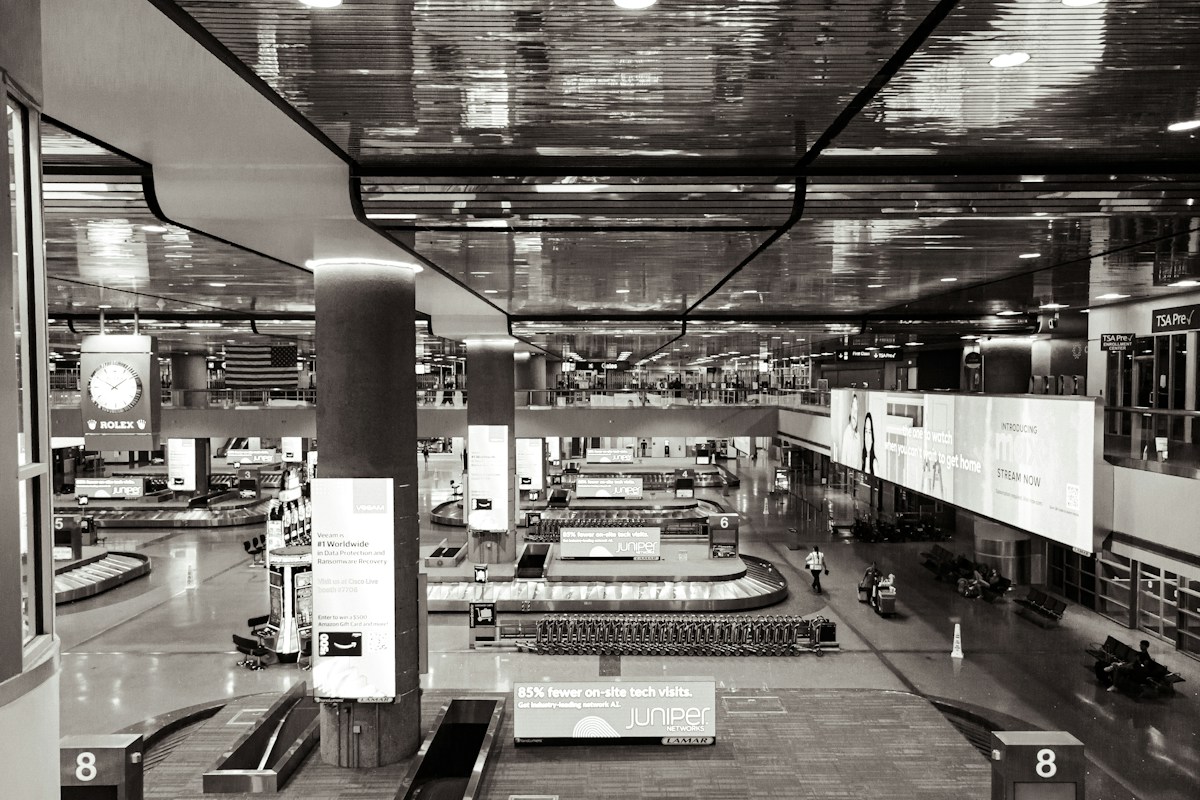
On baggage itself, the published record is consistent: most bags arrive, but the tail of the distribution is long. The SITA Baggage IT Insights report has for years tracked global mishandled-bag rates in the range of roughly 6–7 bags per 1,000 passengers — a figure that still translates to tens of millions of delayed, damaged, or lost bags annually worldwide. The practical reading is that the belt is usually a short wait and occasionally a much longer one, and you cannot tell which you've drawn until you're standing there.
Comparing Your Options: Time, Convenience, and Support
Arrival choices are three levers you trade against each other. Time is the raw minutes from gate to ground transport. Convenience is how much effort and uncertainty those minutes cost. Support is the human or structural help available when something goes wrong — airline bag desks, airport information counters, accessibility assistance teams, or a pre-booked meet-and-greet service.
- Cabin baggage only: Best on time, since you bypass the belt entirely. Convenience drops on long-haul trips with liquids, medications, or family gear, and your buffer is thin if a connection goes wrong and you need to rebook.
- Checked bag, self-guided arrival: The default. Time depends on the carousel; convenience is high if you know the terminal layout; support is reactive — you queue at a bag desk only if something is missing.
- Checked bag with meet-and-greet: A greeter meets you at the gate or in arrivals and helps with the walk, the belt, and the exit. Time may not improve much, but convenience and support rise sharply. Scope varies widely by provider and airport, so confirm directly with the provider exactly where they can and cannot accompany you — airside access rules are set per airport and country, and no third-party listing can guarantee them.
- Accessibility or family assistance: Most airports and airlines offer pre-bookable help with mobility, sensory needs, and strollers. It is usually free but must be requested in advance. Time can be longer; support is the highest of any option.
A meet-and-greet rarely makes you faster through immigration or the belt. Its value shows up when the plan breaks — a delayed bag, a missed driver, a terminal change — and someone with local knowledge is already standing next to you. The decision rule: if your arrival is a single terminal, daytime, no checked bag or one bag, and your onward transport is flexible, self-guided is sufficient. If you're arriving long-haul into a multi-terminal hub after midnight, connecting to a tight onward booking, or traveling with children or mobility needs, the support is usually worth paying for. Compare the fee against the cost of a missed connection or a wrong-terminal taxi ride, not against the price of a coffee.
A Preparation Plan You Can Adapt to Any Airport
Start with documents. Check passport validity against the destination's published rules, confirm whether a visa or electronic travel authorization is required, and carry onward-ticket or accommodation evidence the border team may ask for. These requirements are set by authorities, not airports or airlines, and they change; verify against the official government or embassy source for your nationality and route.
Map the terminal before you fly. Carousel allocations are usually published in three places: the airport's own arrivals or flight-status page, the airline's app under your flight number, and the arrivals-hall screens after you clear the border — cross-check at least two, because allocations can change after a late gate reassignment. For official terminal maps and assistance contacts, go straight to the airport's own website: most publish downloadable maps, an information-desk phone number, and a dedicated page for special assistance. Save those pages offline before you travel. Official taxi ranks are typically signposted inside the terminal and staffed by a dispatcher or licensed queue; rideshare pickup zones are usually outside the terminal, marked with a code (often a letter or number) in the app, and drivers cannot legally collect you at the taxi rank. If someone approaches you inside arrivals offering a ride, that is not the official rank. Note where the information desk sits and whether your terminal has a train or shuttle to the exit.
If you're being collected, agree on a meeting point with a name — "arrivals hall, near the coffee stand by exit 3" — rather than "outside." Share your flight number so the driver can track delays, and agree on what happens if you're held up. Then set a realistic buffer: add the walk, the border queue, the belt wait, and the exit to your onward booking, and leave slack rather than assuming best-case.
Keep a short offline support list on your phone, saved as text so it works without data:
- Your airline's baggage claims line (from your booking confirmation, not a search result).
- The airport's lost-and-found and information desk numbers (from the airport's official contact page).
- Your pickup or meet-and-greet provider's local dispatch number.
- Your travel insurer's 24-hour assistance line, if you have one.
The arrival you remember is rarely the fastest one. It's the one where nothing surprised you — because you'd already decided what to do at each fork, and you knew who to call when the belt stayed empty.