The walk from the jet bridge to baggage claim is where many arrival plans quietly fall apart. Immigration may seem like the hardest stage, but airport floor plans, airline baggage policies, and arrival-flow research show that the handoff can be the genuine failure point — the fifteen to forty minutes when travelers, bags, and whoever is meeting them are all in motion and no one has agreed on a meeting plan.
That is not a queue problem. It is a coordination problem, and it plays out differently for a solo traveler with a carry-on than for a family of five with a stroller and four checked bags, or a group of twelve arriving on separate itineraries. What follows is a preparation framework for each.
Why "just meet at baggage claim" fails, and what to plan instead
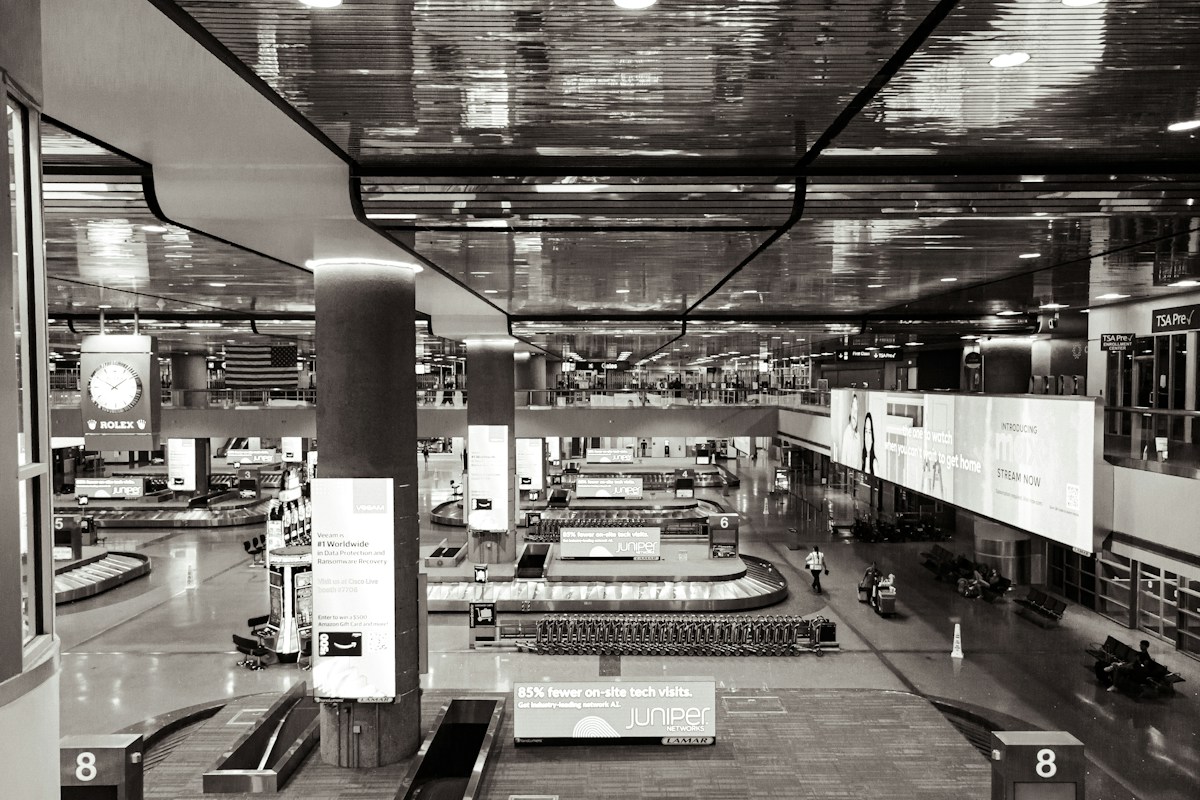
Baggage claim halls are loud, often windowless, frequently shared by multiple flights from different origins, and reshuffled by the airport. A carousel number printed on a booking confirmation is a forecast, not a promise. Airports reassign belts when a flight is delayed or an aircraft swaps, and the monitors beside the carousel are the source that actually matters on the day.
This is why I now advise travelers to build a pickup plan around a fixed, named landmark rather than a belt or a curb. Most major airports publish meeting-point maps online; many have designated "meet and greet" zones in the arrivals hall. Both are worth checking against the airport's own website before departure. For a family arriving at a large international hub, the difference between "we'll find you outside" and "we'll wait at the information desk under the arrivals board, left of the coffee kiosk" is the difference between ten minutes and forty.
A counterintuitive detail: travelers often assume the driver or relative can track the flight and simply appear. Flight-tracking apps have made this far more reliable than it used to be, but they track the aircraft, not the traveler. A plane can land on time and its passengers still emerge ninety minutes later because of a slow immigration queue, a gate change, or a bag that never made the connection. Build slack into the plan and tell your pickup contact the flight number, not the arrival time alone.
Baggage claim: what to prepare before you land
This stage rewards preparation more than speed. Handle the paperwork and the decisions in the air, while you have time and a seat.
- Know your bag's distinguishing features. A ribbon or distinctive tag helps on a crowded carousel, and a photo of the bag with its tag is useful if it does not arrive.
- Keep essentials — medication, chargers, a change of clothes for an infant, travel documents — in the cabin bag. Checked bags occasionally go astray; the cabin bag is your buffer.
- Know your airline's delayed-baggage reporting process and where the desk is located, typically in or beside the baggage hall. Most carriers want a property irregularity report filed before you leave the airport.
- Check oversized and special-item collection points. Strollers, car seats, and sports equipment often come out at a separate door or belt, and airports vary on whether they are delivered to the carousel or held for collection.
- Pack a small folding tote or two. Repacking at the carousel to redistribute weight is common, and a spare bag makes it calmer.
Accessibility matters here. Travelers with reduced mobility, families with young children, and anyone traveling with a service animal should confirm in advance whether the airport offers assistance from the gate through baggage claim and customs — many do, but it is usually arranged through the airline, not the airport. Verify the process with your carrier before departure, and note that assistance provision varies by airport and by country.
Terminal navigation for solo travelers, families, and groups
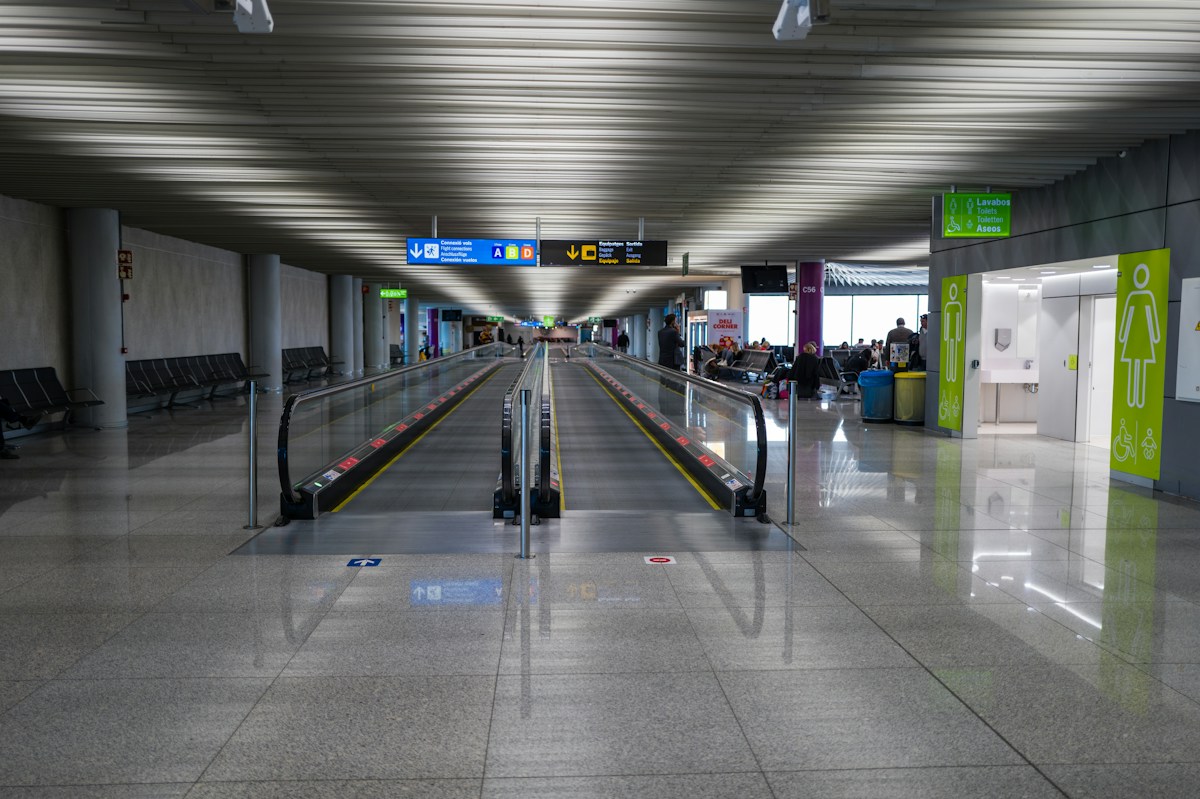
Solo travelers have a structural advantage: one decision-maker, one bag set, one pace. The temptation is to rush the walk from the gate, which is where wrong turns happen. Read the overhead signs and follow the arrivals flow; if a terminal uses a train or shuttle between concourses, confirm the direction before boarding, because some systems run in one direction only.
Families need a route that accounts for strollers and tired children. Before travel, check whether the airport's arrivals route is step-free, where the lifts are, and whether there is a family or quiet area near baggage claim. Many large airports publish accessibility and family-facility maps; some offer stroller loans or family lanes at immigration, though availability is not guaranteed and should be confirmed with the airport.
Groups are the hardest case, and the failure is usually the same: someone assumes someone else has the bags. Assign roles before landing — one person collects bags, one handles documents, one manages children or elders, one liaises with the pickup contact. If the group arrives on separate flights, set a single meeting point and a fallback time. A group that has agreed on a landmark, a phone number, and a "if we're not there by this time, call this number" rule will move faster than one relying on chance encounters in a crowded hall.
For travelers who prefer to prepare with gear — a luggage scale, a compact packing organizer, a document pouch — comparison shopping is reasonable, and {{AWIN_MERCHANT_LINK_1}} can be a starting point for that research. None of it replaces the plan itself.
The through-line across all three traveler types is a single habit: decide the handoff before you fly. Name the meeting point, share the flight number, keep essentials with you, and confirm assistance and special-item collection with the airline and airport in advance. The rest of the arrival — the queue length, the belt number, the timing — belongs to the airport on the day, not to any guide. Prepare the parts you control, and treat the rest as the ordinary uncertainty of travel.