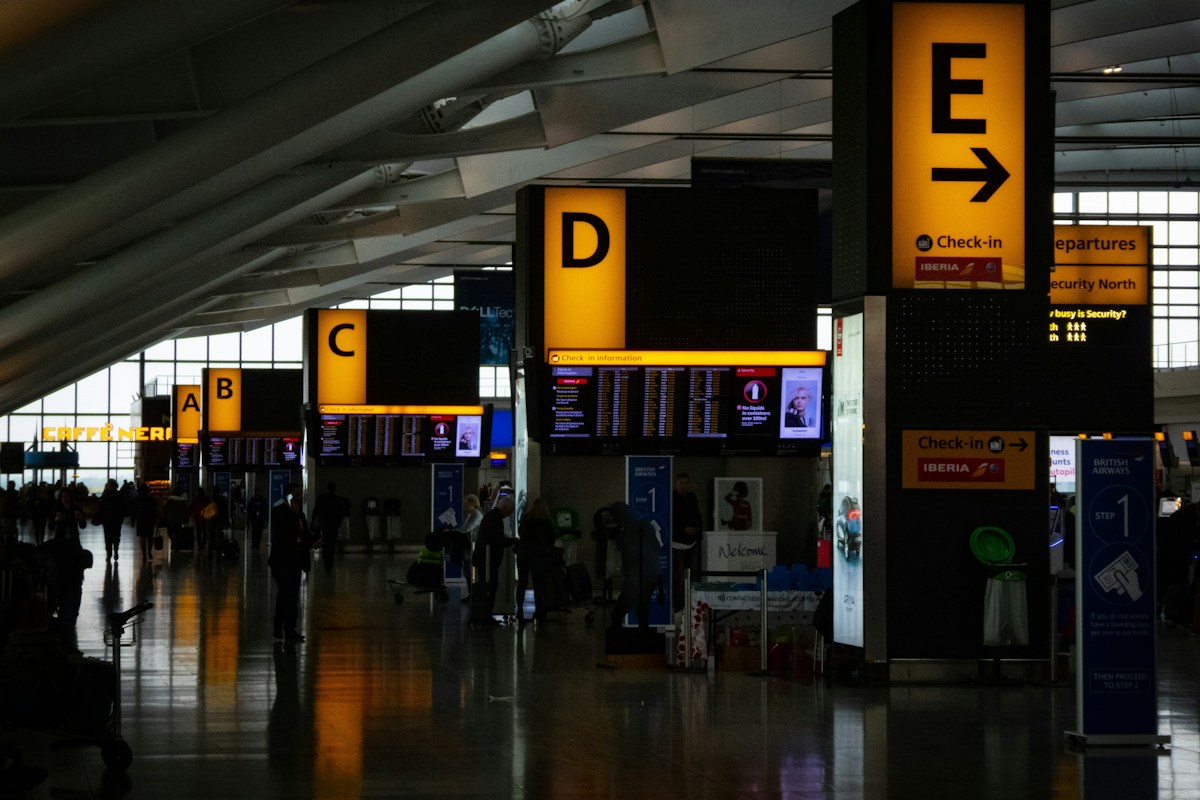
What should you actually have ready before the plane door opens?
Most travelers plan the flight and forget the arrival. The seat is booked, the bag is packed, and then the aircraft parks at a remote gate in a terminal you have never seen. That is the moment the next decision arrives: where do you go first, and who needs to know you have landed?
The honest answer is that arrival planning is not one task. It is a short sequence of decisions made in a fixed order — documents, then timing, then communication — and each one depends on details that vary by airport, by country, and by your own traveler status. Get the sequence right and the rest is navigation. Get it wrong and you are the person reorganizing a folder while the queue moves without you.
Documents first: the part you cannot fix at the gate
Border entry is a government decision, not an airport service, and no amount of preparation changes an officer's judgment. What preparation does is remove avoidable friction. Before you fly, confirm the entry requirements directly with the destination country's official immigration or foreign-affairs source and with your airline, because carriers apply their own document checks at boarding and can refuse a passenger whose paperwork does not match what border staff expect.
Build a single physical folder, even if you also carry digital copies. Include your passport, visa or entry authorization, proof of onward travel, accommodation details, and any health documentation the destination currently requires. Keep it in your cabin bag, not the hold. A traveler connecting through a third country may also need transit documentation, which is easy to overlook when the booking shows one itinerary and three jurisdictions.
- Passport validity: many countries require a set period beyond your planned departure, and the rule differs by destination.
- Visa or electronic authorization: check the official government portal, not a third-party reseller page.
- Proof of onward or return travel, and accommodation address for the arrival form.
- Any required health or insurance documentation, verified against the current official list.
- Accessibility or medical documentation if you are requesting assistance or carrying medication.
One detail is consistently underestimated. Arrival forms, kiosks, and e-gates often ask for an address in the local script or format, and a hotel booking confirmation may not show it in the form the system expects. Save the property's full address and phone number before departure. It costs a minute at home and saves an awkward ten at a self-service terminal.
Timing: plan a sequence, not a stopwatch
No credible source can promise you a deplaning-to-curbside time. Immigration queues move with flight banks, staffing, and the arrival mix, and deplaning itself can take twenty minutes or more on a widebody. What you can plan is the order of operations and a realistic buffer for each stage.
Think in stages: aircraft door to terminal, border control, baggage reclaim, customs, then landside. Each stage has its own variable. A traveler with only cabin baggage skips reclaim entirely; a family with checked bags and a stroller may need longer at every step. If you have a tight onward connection, the airport's official minimum connection time is the number to check, and it is published by the airport or the airline — not by a forum post.
Here is a concrete case. A reader arriving on an evening long-haul into a large European hub, with a checked bag and a pre-booked car, has three timing problems at once: a border queue that may be long, a bag that may arrive on a later belt cycle, and a driver who needs to know when to enter the pickup zone. The useful plan is not a single arrival time. It is a landing message, a "through border control" message, and a "bag in hand, heading out" message — three points that let the driver work with real information rather than a guess.
For anyone with reduced mobility, the timing consideration shifts. Pre-booked assistance is usually arranged through the airline, and the meeting point and wait can vary by terminal. Confirm the booking reference and the expected collection point with the airline before you fly, and allow extra time rather than assuming the service will meet you at the door.
Communication: the plan that survives a missed message
Almost every arrival problem is a communication problem wearing a disguise. The driver is at the wrong door. The family member is waiting at arrivals when you came out at departures. The hotel shuttle stopped running an hour ago.
Agree the plan before departure, in writing, and include a fallback. Name the terminal and the specific meeting point — "arrivals hall, near the information desk" beats "the airport." Exchange a messaging app that works on airport Wi-Fi, and confirm whether your roaming or eSIM will be active on landing. If it will not, screenshot the key numbers and addresses so they are readable offline.
If you are booking a transfer or meet-and-greet in advance, check the provider's stated policy on flight delays, waiting time, and what happens if you cannot find each other. Those terms vary widely and are usually published on the provider's page; read them before paying rather than at the kerb. Where a service matches your needs, {{AWIN_MERCHANT_LINK_1}} is a reasonable place to compare options, but verify the pickup rules and cancellation terms directly with the provider.
The editorial conclusion here is deliberately modest. Arrival planning works when you treat documents, timing, and communication as one linked sequence and verify each element against an official airport, airline, border, hotel, or service-provider source. Nothing in that sequence guarantees a queue length, an entry outcome, or a driver at the door. What it does is reduce the number of decisions you have to make while tired, in an unfamiliar terminal, with a bag in one hand.
Pack the folder. Save the address. Send the landing message. Then let the airport do what airports do.