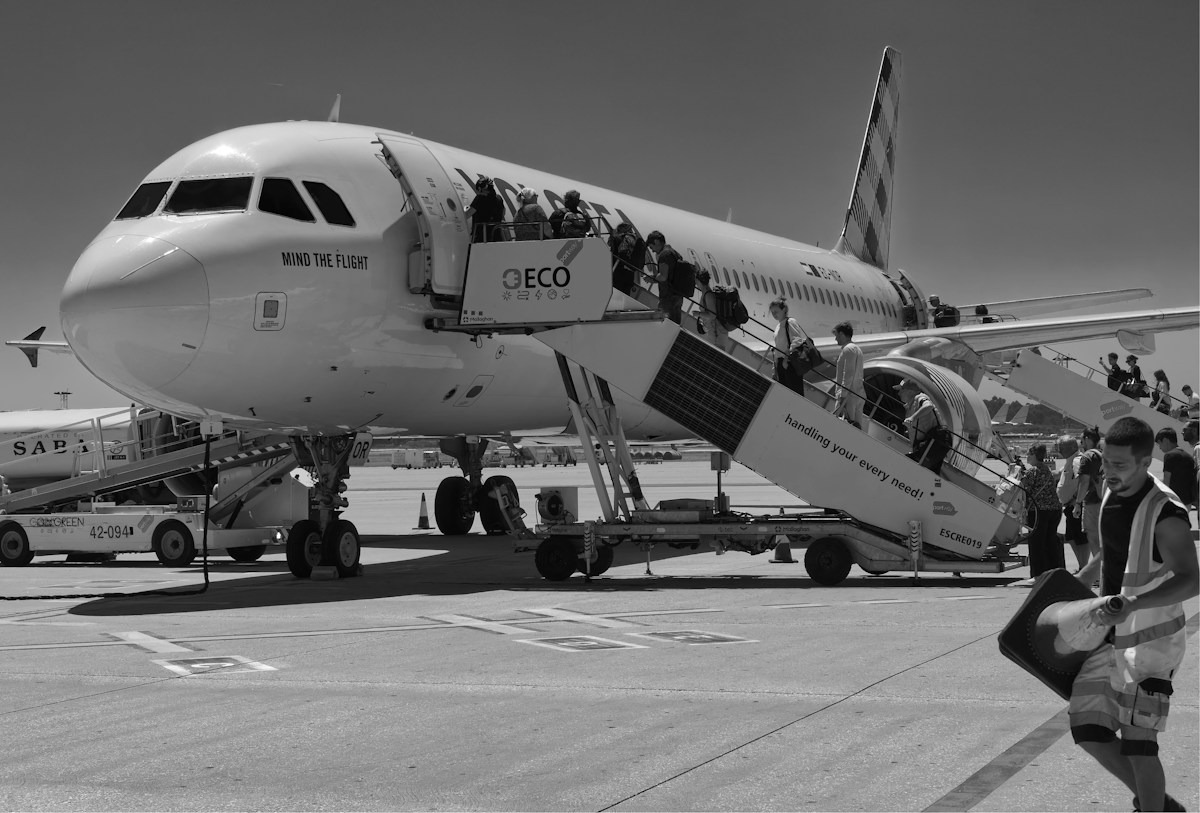
Your flight lands at 06:40 after a nine-hour red-eye. You have a checked bag, a child half asleep on your shoulder, and a hotel booking across town. Somewhere past the sliding doors, a driver may or may not be holding a sign with your name. That gap between the aircraft door and the curb is where meet-and-greet services either earn their fee or quietly fail — and the difference usually comes down to what was agreed before departure, not what happens on the day.
Airport pickup is often marketed as a single product. In practice it splits into at least three: a curbside transfer with a driver who tracks your flight, an in-terminal meet-and-greet where someone waits inside arrivals and walks you through, and a chauffeured service that extends to fast-track immigration or baggage help. Each involves different permissions, different staffing, and different things that can go wrong. Understanding which one you have booked is the first decision, and it belongs in the planning stage, not at the baggage carousel.
What Actually Happens Between the Aircraft Door and the Curb
Arrivals unfold in a fairly consistent order: disembarkation, passport control or e-gates, baggage claim, customs, then the public arrivals hall. The arrivals hall is the usual meeting point because it is landside — accessible to drivers who have not cleared security. That single fact explains most pickup logistics. A driver cannot legally or practically wait at your gate in most jurisdictions, so any service promising "gate meet" is either describing a staffed escort with special access or overstating what it can deliver.
Where the meeting point sits varies more than travelers expect. At some airports, greeters wait at the exit from customs with name boards; at others, regulations push commercial drivers to a designated pickup zone a short walk from the terminal, and app-based pickups may be confined to specific ranks or garage levels. Airport authorities publish these rules, and they change — Heathrow, for example, has repeatedly revised its drop-off and pickup charging and zoning arrangements, and many U.S. airports have shifted ride-hail pickups to consolidated lots. Verify the current rule with the airport's own website rather than a third-party blog.
Border entry itself sits outside any service provider's control. Whether you clear immigration quickly or face secondary questioning depends on your nationality, visa status, and the officer's assessment. No meet-and-greet package changes that outcome, and any provider implying otherwise is worth a second look.
A Preparation Plan That Works Across Airports
Because so much varies by airport and traveler, the reliable approach is procedural rather than destination-specific. Build the plan around information the provider needs from you and information you need from them.
- Flight number, not just arrival time. Reputable services monitor the flight and adjust for delays. Give them the carrier and flight code so they can track it.
- Exact meeting instructions in writing. Ask for the terminal, the hall, the specific sign or desk, and a contact number that works on a foreign SIM. "We will find you" is not an instruction.
- Baggage reality. Tell them if you are checking bags. A driver expecting a walk-out in ten minutes may not hold a position for a forty-minute baggage wait unless the booking allows it.
- Waiting-time terms. Free waiting windows after landing are common but vary; read the clause and confirm whether it starts at touchdown or at the scheduled arrival time.
- Accessibility and family needs. If you use a wheelchair, travel with a stroller, or need step-free access, state it at booking. Airport accessibility pages and the airline's special-assistance desk are the authoritative sources for terminal facilities; the pickup provider handles the vehicle side.
- Language. If the driver does not share your language, arrange the contact method in advance — a messaging app with written address details reduces confusion at a busy curb.
On the provider side, check what happens if your flight is cancelled or diverted, whether the fare is fixed or metered, and how payment and cancellation work. For travelers comparing options, services are often bookable through aggregator platforms, and a placeholder such as {{AWIN_MERCHANT_LINK_1}} is where you would check current terms. Treat any listing's claims as a starting point and confirm specifics directly.
Where Meet-and-Greet Earns Its Fee — and Where It Doesn't
The counterintuitive finding from arrival research is that meet-and-greet tends to matter most for travelers who are least able to self-navigate: first-time visitors to a country with an unfamiliar script, older travelers, families with young children, and anyone arriving late at night. For a confident solo traveler with carry-on only and a working local SIM, a tracked curbside transfer usually covers the same ground at lower cost. The premium buys human wayfinding, not speed.
It also buys a buffer against the unknown. An airport you have never seen, a language you do not read, a currency you have not changed — these are the moments a named greeter helps. They are also the moments when a badly briefed greeter adds confusion, which is why the written meeting instructions matter more than the marketing copy.
The editorial conclusion follows from disclosed criteria: choose meet-and-greet when your arrival combines at least two risk factors — unfamiliar airport, checked baggage, dependents, accessibility needs, late-night landing, or limited language — and choose a simple tracked transfer when you have none. In both cases, verify meeting-point rules with the airport, confirm waiting terms with the provider, and keep your own copy of the contact details. The service can smooth the curb; the preparation is yours.